Mini Excavators: buying guide, prices & sourcing
Last reviewed . We review this page periodically for accuracy.
Quick answer
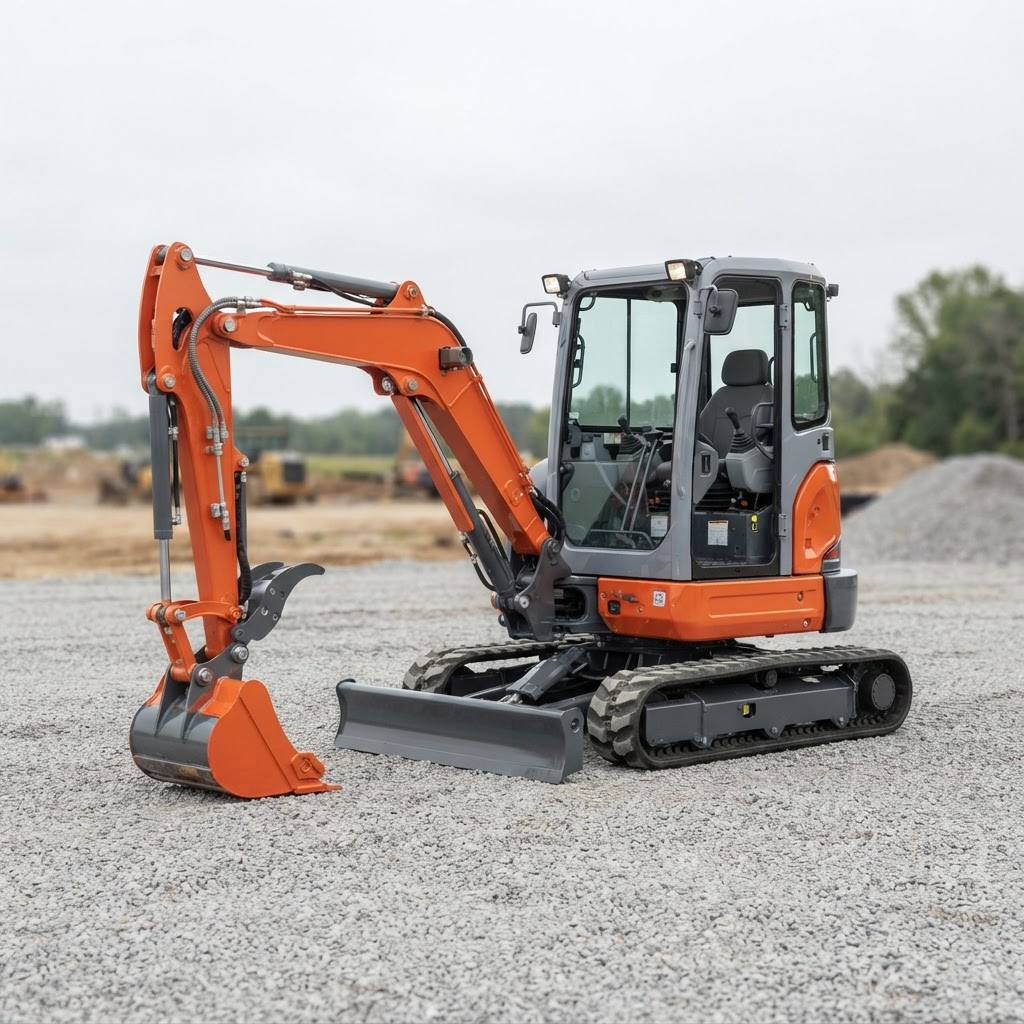
A mini excavator is a compact tracked digging machine, typically under 10 metric tons, used for trenching, digging, grading, and site work in tight spaces. Used units commonly range from roughly $15,000 to $60,000 depending on size, age, hours, and condition.
What is a mini excavator?
A mini (or compact) excavator is a small hydraulic excavator on rubber or steel tracks with a boom, dipper, and bucket. Its compact footprint lets it work in confined areas where a full-size excavator cannot, while still offering strong digging force for its size.
Common uses
- Trenching for utilities, drainage, and irrigation
- Digging footings and small foundations
- Landscaping and grading
- Demolition of small structures
- Site prep and material handling with attachments
Approximate used pricing
Ranges are approximate and for orientation only. Actual pricing varies by hours, condition, configuration, region, and season. We do not guarantee prices or maintain live inventory.
New vs. used
New mini excavators carry a significant price premium but come with warranties and zero-hour components. Well-maintained used units in the 1,000–2,500 hour range often represent strong value, since these machines are built to run for many thousands of hours when serviced properly.
What to inspect before buying
- Undercarriage and tracks for wear (often the costliest wear item)
- Hydraulic cylinders and hoses for leaks
- Pins and bushings for slop or play
- Boom, dipper, and bucket for cracks or weld repairs
- Service records and hour meter consistency
- Cold-start behavior and smoke color
How usage affects value
Hours matter more than age. Many mini excavators are reasonable buys up to ~2,500–3,000 hours with good maintenance; beyond that, inspect components carefully. Always weigh hours against documented service history.
Buying considerations
- Match operating weight to your typical job and transport capability
- Confirm required attachments (thumb, augers, breakers) and coupler type
- Check whether it has a zero/near-zero tail swing if you work near walls
- Verify transport: trailer rating and tie-down points
Common mistakes to avoid
- Buying on price alone and ignoring undercarriage wear
- Overlooking hours-vs-service-history balance
- Not confirming attachment compatibility
- Underestimating transport and delivery costs
Model buying guides
In-depth, spec-verified research pages for models buyers ask about most. We can source any make or model — these are a starting point, not the limit.
- Kubota KX040-4Compact (mini) excavator, conventional tail swing (4-ton class)A capable 4-ton excavator with strong digging performance. Confirm the blade configuration (it changes weight) and inspect the undercarriage and hydraulics closely.
- Kubota U35Compact (mini) excavator, tight/zero tail swing (3.5-ton class)An excellent tight-quarters excavator, but 'U35' spans generations — pin down exactly which one you are buying before comparing specs or price.
- CAT 305Compact (mini) excavator, 5-ton classA strong 5-ton-class machine with Cat dealer support, but the '305' name spans generations — identify exactly which one you are buying.
- Bobcat E35Compact (mini) excavator, 3.5-ton classA very popular, well-supported 3.5-ton excavator. Because arm and engine options change the numbers, confirm exactly which variant a listing is before comparing.
- John Deere 35GCompact (mini) excavator, 3.5-ton classA dependable 3.5-ton excavator with Deere support. Confirm the arm and cab/counterweight configuration, and inspect the undercarriage and hydraulics.
Other popular models
Models buyers commonly ask about in this category. We can source any make or model — these are a starting point, not the limit.
Frequently asked questions
Related buying guides
Ready to find your mini excavator?
Tell us the machine, your budget, and your location. We search the market and send you a ranked Scout Report of the strongest candidates.
Get help finding a mini excavator
Tell us what you need. A Scout will follow up — no account required to start.